
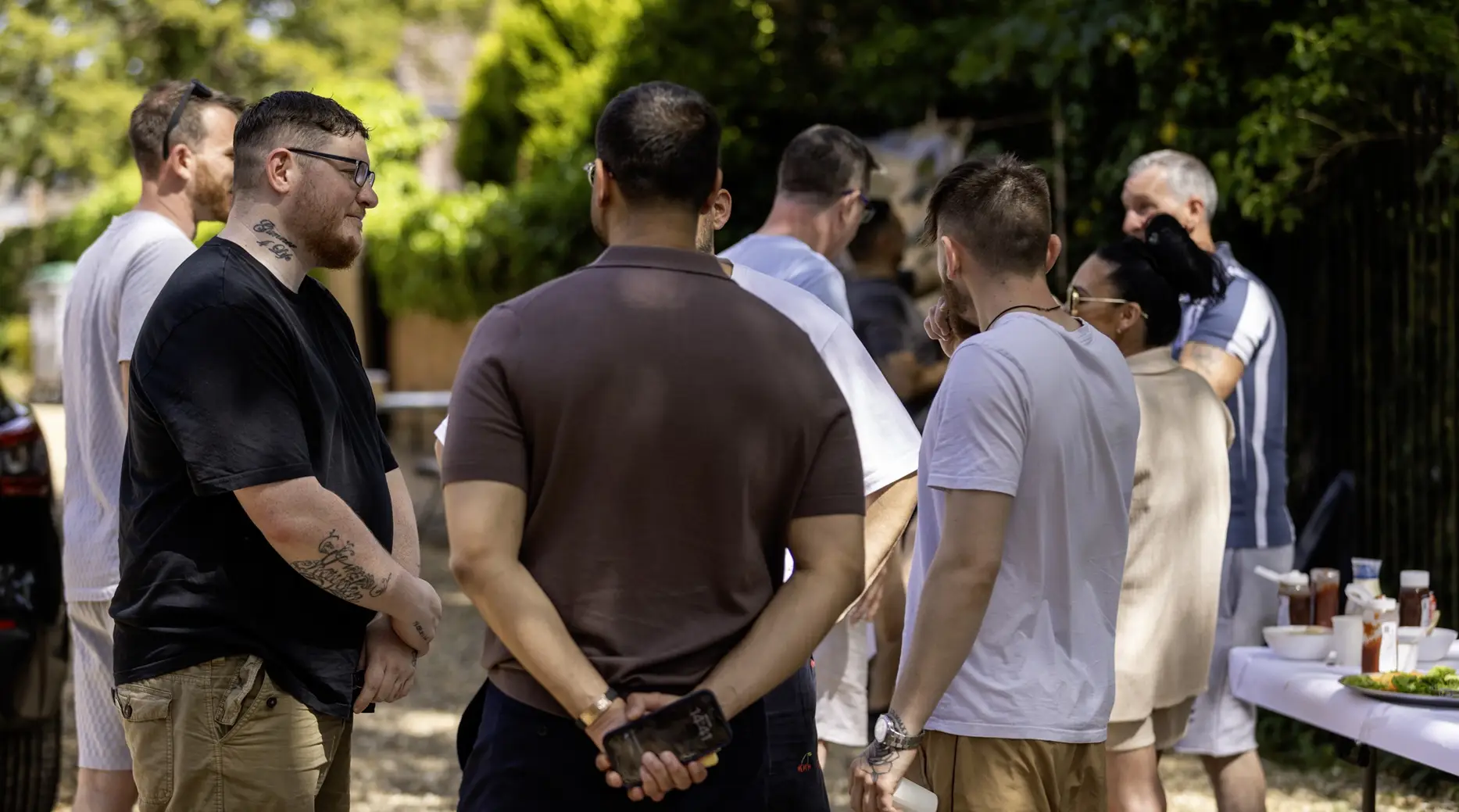
You’re in the pub, you’ve got a Coke in your hand and you’re nodding along, and someone’s telling the story about the night in Croatia for the fourth time this year, and you can feel your face doing the thing where it’s pretending to laugh. But you’re thinking to yourself:I don’t know if I want to be here anymore.And it’s not just tonight.
You get to the car twenty minutes later and the relief is almost embarrassing. You sit there with the keys in your lap and try to work out what just happened, because nothing actually went wrong. Nobody upset you or pressured you to drink. Your friends were exactly who they’ve always been. The problem, you’re starting to suspect, is that you’re not.
One of the hardest parts of recovery is realising that getting sober changes the way familiar places and familiar people feel. “Oh by the way, you might feel weirdly distant from your best mates” isn’t on the leaflet.
Why old friendships can feel so different in recovery
A lot of friendships, especially the ones that ran through your twenties and into your thirties, had substances sitting right in the middle of them. Sometimes just as the social glue, the reason for the night, the rhythm of the conversation, the thing that made everyone funnier and easier to be around.
This doesn’t mean they were fake friendships; the closeness and the laughing was all real. The 3am conversations where someone told you something they’d never told anyone were real. But the substance was part of the architecture, and when you take it out, the shape of the friendship changes whether anyone wants it to or not.
In recovery, your tolerance for certain things drops quite suddenly. Chaos that used to feel fun starts to feel exhausting. Conversations that used to feel intimate start to feel a bit repetitive. The same story for the fourth time stops being charming and you notice when people aren’t really listening to you.
Your old friends haven’t done anything wrong. They’re the same people they were six months ago, some of them genuinely love you. Some of them are proud of you and some are uncomfortable around the new version of you because your recovery is holding up a mirror to their behaviours too. Some might be waiting for the old you to come back, because they liked the old you and they don’t fully understand that the old you isn’t on holiday. Nobody has actually done anything wrong, but things still don’t feel the same.
The strange loneliness of becoming someone new
There’s a particular kind of loneliness that nobody really tells you about, and it’s most noticeable around month three or four. You’re too sober for the old environments and too emotionally raw for the new ones so you feel like you don’t fit anywhere yet, you’re between selves.
People assume sobriety feels immediately freeing; and sometimes it does. But socially, it can feel like you’re being made to do a school presentation while everyone else is on a beach. You’re suddenly aware of your hands. You’re rehearsing sentences before you say them. You’re noticing how loud the music is, how long the night has gone on, how tired you are, how much you’d quite like to be in bed by ten.
Substances did a lot of work, like making the small talk bearable and smoothing the gap between who you are and who you wanted to be in the room. When you take all of that away, the self-consciousness comes flooding back before your confidence has had any chance to grow up naturally on its own.
So you overthink. You worry you’re boring. You wonder whether people preferred the old you. You pretend to feel comfortable for an hour and then leave shattered, like you’ve been doing a job interview the entire time. You miss spontaneity. You miss being the person who’d say yes to anything. You miss the rituals: the pre-drinks, the taxi, the slightly stupid group chats at 1am. You miss a version of closeness that you can’t have anymore, at least not the way you used to have it.
And then, on top of all that, you feel guilty for missing any of it. Because you’re meant to be grateful because you’re finally free! You’re meant to be radiant with recovery.
You’re allowed to not feel any of that yet, and missing it doesn’t mean you’re craving it.
When you start noticing things you used to ignore
There’s a stage in recovery where you start seeing things you used to be too involved in to see clearly.
How much of the social calendar was actually planned around drinking. How many plans dissolved if alcohol wasn’t part of them. How much certain conversations went in circles, the same complaints, the same stories, the same wounds being picked at on rotation. How much emotional honesty wasn’t really happening, even though it felt like it was at the time, because everyone was a few drinks deep and saying things they wouldn’t say in the morning and wouldn’t reference again.
You start noticing that you’re sitting halfway through a night out and you’re the only person mentally present, watching people you love disappear into intoxication in real time. You used to be in there with them and you’re watching from the outside and it feels strange, and a bit sad.
Now, it’s very easy to slip into an “I’ve had an awakening” tone, and you should resist it, in your own head as much as anywhere. There’s no superiority in this. The people you’re watching aren’t beneath you, you were one of them six months ago.
Missing people you no longer feel safe around
This one is harder to talk about and probably the most important because you can love someone and know, in your gut, that being around them pulls you backwards. You can miss a friendship without missing the lifestyle that came with it. You can grieve someone who is technically still alive, still on your phone, still posting on Instagram, still sending the occasional voice note you don’t really know how to reply to.
Sometimes the relationship doesn’t end, but you start to drift apart. You stop replying as quickly. You stop being available for the long nights out. You see the photos the next morning and feel both relieved and sad that you weren’t there. Both feelings are valid and neither cancels the other out.
There’s a guilt that comes with this too though.. A sense of disloyalty because these were the people who sat with you in the worst of it. Some of them held your hair back, some of them lent you money. Some of them knew things about you that no one else did. Pulling away from them can feel like a betrayal, even when you know that staying close in the same way isn’t possible right now.
Sometimes recovery involves grieving relationships before you fully understand whether they’re ending or just changing shape. You might find each other again in a few years on different terms, but you might not.
Recovery means learning how to socialise again
Nobody tells you that you’ll basically have to learn how to be around people again, almost from scratch, like you’re fourteen.
I’m not talking about the mechanics; you can still hold a conversation. But getting to a point where it feels natural and you’re not rehearsing or exhausting yourself, that takes time. You’ll have a brilliant Tuesday dinner with two people you barely know and feel like yourself again, and then you’ll go to a wedding on the Saturday and feel like you’re wearing someone else’s skin.
Learning to tolerate awkwardness without trying to escape it comes in really useful here. Sitting in a slightly uncomfortable silence and not filling it. Going home when you want to go home, without making a long apology about it. Letting a conversation be a bit boring without panicking that you’re the boring one. Discovering that connection doesn’t have to be loud or chaotic or fuelled by substances.
Most people in recovery worry that they’ll never feel fully comfortable around other people again. Especially in the early months, but eventually you’ll start building friendships that don’t require you to be anything but who you are, and if you’e still trying to figure that out, therapy can help.
You’re allowed to outgrow certain relationships
There’s a version of this conversation that’s all about “cutting toxic people off,” but that’s not what this is. Some of the people you’ll naturally move away from in recovery aren’t toxic at all. They’re just on a different path now, and where you used to walk the same one, you don’t anymore. That’s allowed to be true without anyone being the villain.
Some friendships survive in a different form. You see each other twice a year instead of every weekend. You don’t share everything anymore but the affection is still there. Some go quiet for a while and come back later, when both of you are in a different place. Some don’t come back, and you find that you don’t need them in the way you thought you did.
Growth changes compatibility and it doesn’t have to be a big rupture. It can just be a gentle, honest acknowledgement that the friendship that worked when you were both in active addiction isn’t going to work now that one of you has found recovery.
If you’re feeling like a stranger to your own life at the moment, then I want to reassure you that what you’re experiencing is perfectly normal in recovery and it doesn’t mean you’ll never feel comfortable anywhere again.
It’s actually a sign that things have changed, and you’re still catching up with it. Identity takes longer to settle than people think. Relationships in recovery usually change more gradually than people expect. It’s more of a slow drifting apart than one clear break.
Recovery can leave you feeling temporarily homeless socially. Between the old places you can’t go back to and the new ones you haven’t discovered yet, and that in-between should be talked about more.