
Benzodiazepine Rehab
Treatment for benzodiazepine dependence at Abbington House in Hertfordshire, built around a medically supervised taper. Whether it began with a prescription or not, you will never be asked to just stop.
01438 583222
How benzodiazepine rehab works: the taper comes first
Benzodiazepine rehab at Abbington House begins with the thing most people are frightened of getting wrong: coming off the drug safely. Stopping suddenly after long-term benzodiazepine use can cause seizures and severe withdrawal symptoms, which is why NHS guidance is that the dose is reduced gradually rather than stopped. There is no abrupt stop on arrival. Your dose is reduced step by step through a medically supervised taper, planned at assessment and adjusted to how you respond, with qualified nursing on site day and night.
There is no separate benzodiazepine detox to get through first. Medical detox here means the taper itself: a planned reduction under medical supervision, in the same setting as everything else. The taper is where benzodiazepine addiction treatment starts, not where it ends. What the tablets leave behind, most often the anxiety or sleeplessness they were first prescribed for, is the longer piece of work, and it runs alongside the reduction rather than waiting for it to finish.
If the dependence began with a prescription
Many of the people we see for benzo addiction never misused anything. A prescription for anxiety or sleep, meant to last two to four weeks, quietly became months and then years, and every attempt to reduce brought back something worse than the original problem. Some of what gets labelled benzo abuse started exactly this way: a medication taken as directed, and a body that adapted to it. Physical dependence is not a failure of willpower; it is what this class of drugs does when it stays in the picture long enough. Our benzodiazepine addiction page explains how that happens.
Others arrive by a different route: diazepam or Xanax bought rather than prescribed, often used alongside alcohol or other drug use, often at unknown strength. You don’t need a clear label for what has been happening, and you don’t need to know exactly what you have been taking. “I’m not sure what’s in them” is useful information, not a reason to delay the conversation.
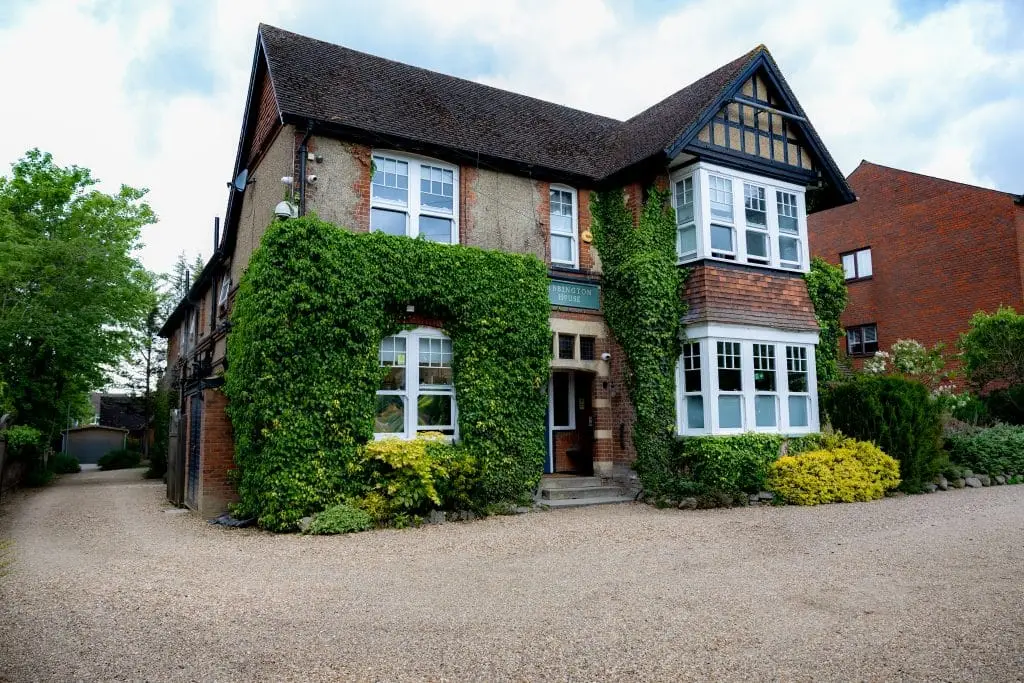
Detox and the taper at Abbington House
Where many providers separate detox and rehab treatment into different places or different fees, at Abbington House the taper is part of the residential stay: one setting, one team, one fee. Assessment by healthcare professionals before admission establishes what you are taking, at what dose, for how long, and what else is in the picture — particularly alcohol, which changes the treatment plan. From there the reduction is managed by the clinical team, usually by moving to a longer-acting benzodiazepine and stepping down gradually, at a pace set by how you respond rather than by a fixed schedule.
The initial symptoms of benzo withdrawal — the physical benzodiazepine withdrawal symptoms such as tremor, sweating and restlessness, alongside the rising anxiety — are eased with medical support on site, so you are never left to manage withdrawal symptoms alone. What benzodiazepine withdrawal involves in full is explained in our withdrawal guide, and how detox runs in practice is on our medically supervised detox page. The point of an inpatient rehab setting is simple: it is how you detox safely, with support there before you have to ask for it.
A taper cannot be rushed to fit a calendar. A typical stay is around 28 days, but with inpatient benzodiazepine rehab the length of stay is planned around the taper at assessment, not the other way round.
The work alongside the taper
- Benzodiazepine rehab therapy focuses less on the drug than on what it has been holding down: the psychological aspects of the dependence rather than just the chemistry. Benzodiazepines are usually prescribed for severe anxiety or for sleep, which means the difficulty they were managing is often still there underneath, and anxiety disorders in particular tend to resurface as the dose comes down. This is what makes reducing alone so hard:at home, the only reliable answer to that anxiety is the next tablet. In residential treatment there is another answer: therapy sessions through the day, people around you in the evening, and emotional support at two in the morning when the wave arrives, not at next week's appointment.
- Successful benzodiazepine rehab depends less on the taper than on this work alongside it: one-to-one and group therapy into the underlying causes, relaxation techniques that hold without a tablet, and rebuilding sleep and calm for everyday life. Physical and mental health are looked after together, and where anxiety, depression or trauma sits alongside the dependence, both are treated as dual diagnosis. Family supportis included, because the people close to you have usually been carrying this too.
- Before you leave,relapse prevention planning is done while support is still around you: the situations most likely to lead back to the tablets, what will replace them, and who to call. That is the surest way to prevent relapse. Every stay includes one year of aftercare and lifetime access to the Abbington Community,with ongoing support groups and contact with the team to support recovery and help maintain sobriety. Long term recovery is built there, in the months after the stay; lasting recovery rarely comes from the taper alone.
- Michael Williams
Who needs residential, and who can reduce with their GP
Not everyone needs an inpatient stay, and there is more than one way through this. If you are taking a prescribed dose and the picture is otherwise stable, a gradual reduction managed by your GP is often the right route among the treatment options available, and it costs nothing. Community services offer outpatient benzo rehab support in most areas, particularly where the benzodiazepines were not prescribed.
Residential treatment tends to make sense when reduction with a GP has been tried and has not held, when the dose has grown beyond the prescription or comes from more than one source, when alcohol or other substances are part of the picture, or when the anxiety underneath is severe enough that home reduction keeps collapsing. A rehab centre gives you a supportive environment where the reduction cannot quietly stall. If several of those are true for you, a conversation with our admissions team is a reasonable next step, and it commits you to nothing.
Cost and starting treatment
Treatment at Abbington House is charged as a single fixed fee for the agreed stay, with the taper, therapy, family support and a year of aftercare included; there is no separate detox fee.
The figures are set out on our rehab costs page, and how admission works, from first phone call to arrival, is on our admissions page. Where treatment is appropriate and a place is available, admission can usually be arranged within 24 to 48 hours. What people mention most often in reviews is a compassionate team that knows this from the inside.
Call 01438 583222 or email us. If we are not the right setting for the clinical picture, we will say so and point you towards a service that is.
Questions people ask about benzodiazepine rehab
01 : Should I stop taking benzodiazepines before I arrive?
No. Do not stop or cut down suddenly before admission. Continue your normal dose until you have been assessed, and the reduction will be planned safely from there. Stopping abruptly is the one thing NHS guidance is clearest about avoiding.
02 : How long does benzodiazepine rehab take?
It depends on the taper. A typical residential stay is around 28 days, and the length is agreed at assessment based on your dose, how long you have been taking it, and how the reduction goes. Our length of stay page explains how that decision is made.
03 : Is benzodiazepine detox dangerous?
Unmanaged, it can be: sudden withdrawal after long-term use carries a risk of seizures. A supervised taper exists precisely to remove that danger, which is why benzodiazepine reduction is planned and gradual wherever it happens, at home with a GP or in residential care.
04 : Is treatment different for diazepam, lorazepam or clonazepam?
The approach is the same. Diazepam addiction treatment, lorazepam addiction treatment and clonazepam addiction treatment all follow the same taper-led model; what changes is the starting point, since shorter-acting drugs are usually switched to a longer-acting one first. People search for diazepam rehab or lorazepam rehab as though each drug needs its own clinic. It doesn’t work that way, and Xanax addiction treatment follows the same path, with extra care because alprazolam is short-acting.
05 : Do you treat Xanax and street benzodiazepines?
Yes. Street benzodiazepines are often stronger than expected or not what they claim to be, and they are frequently used alongside alcohol, which is the riskiest combination to withdraw from at home. Both are treated within the same stay, with the taper adjusted to the full picture.
06 : How much does benzodiazepine rehab cost?
The benzodiazepine rehab cost at Abbington House is the same as any other stay: one fixed fee for the agreed length, with the taper, therapy, family support and a year of aftercare included. The figures are on our rehab costs page.