
Therapy is central to residential treatment at Abbington House. It runs throughout the week and is integrated into daily life inside the house.
This page explains how therapy works here, what approaches we use and what you can expect during your stay.
We draw on structured approaches such as CBT, DBT and Motivational Interviewing as practical tools. The focus is always on what is actually happening in your life. Sessions are paced properly, so if something needs time, it gets time.

Sessions focus on:
Group therapy takes place several times a week.
This is where isolation starts to break down. People recognise their own thinking in someone else’s words. Defences soften as people start to realise that this is a shared experience in many ways.
Groups focus on:
Abbington House follows a 12 Step structure.
The Steps provide a framework for honesty, responsibility and change. They are introduced gradually and supported consistently.
Clients are encouraged to engage with the process at a steady pace. The aim is long-term stability, not short-term intensity.
Many people arrive either emotionally numb or constantly on edge. Therapies include learning how to regulate emotion without turning to substances.
This work involves:
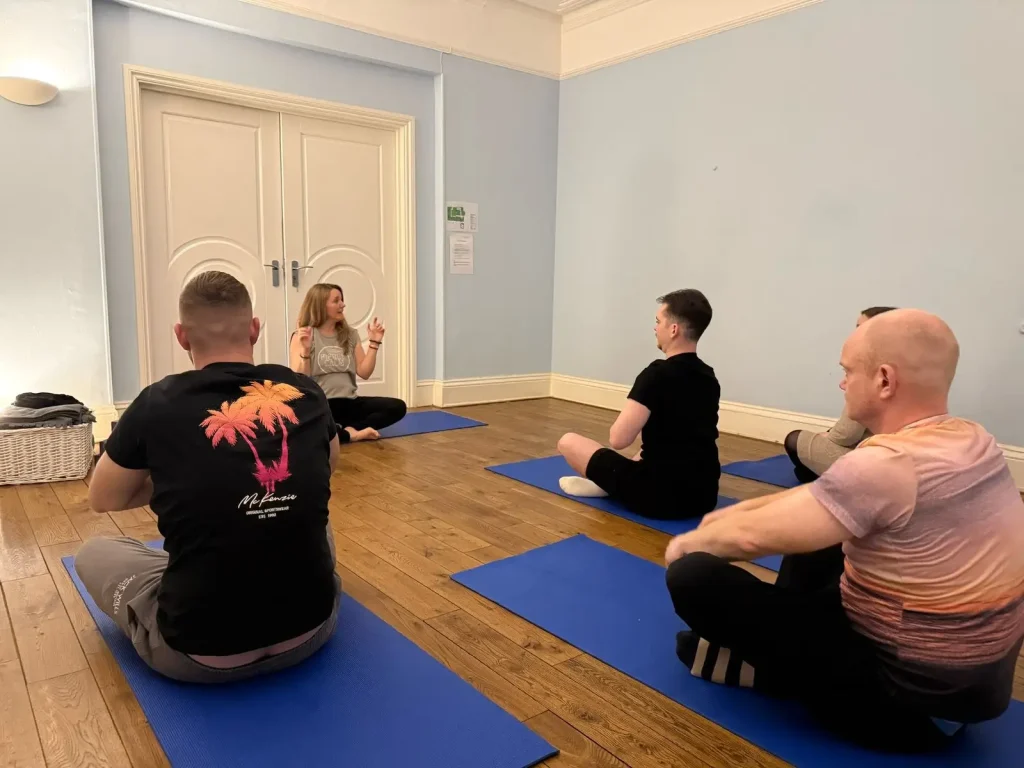
Therapy at Abbington House isn’t limited to talking in a room. Alongside structured clinical work, clients take part in holistic sessions that support physical and emotional regulation.
These may include:
These sessions are built into the weekly structure of residential treatment.
For many clients, this work helps reduce anxiety, improve sleep and create enough steadiness to engage more fully in therapy.
Holistic sessions support the clinical work rather than replace it.
(You can read more about this on our activities page)

Trauma-Informed Approach
Addiction rarely develops in isolation. As the trauma specialist at Abbington House, my role is to help people feel safe enough to engage in treatment.
A trauma-informed approach at Abbington House means:
Trust is built gradually and stability comes before depth.
One of the key differences with residential rehab is continuity.
If a session brings something difficult to the surface, clients are not sent home to sit with it alone. Support is available throughout the day. Staff know each client personally and conversations continue naturally.
Consistency reduces anxiety, but predictability builds safety. That steady environment allows therapy to go deeper than it often can in outpatient settings.
Where appropriate, families can be involved during treatment, we provide a 16-week programme for loved ones which covers:
(Full details are available on our Family Support page)

Recovery does not end at discharge. Structured aftercare groups and continued connection via the Abbington Community Team provides accountability and support during those early stages. This continuity strengthens the work completed during residential treatment.
Why Therapy at Abbington House Feels Different
Progress is built week by week, not forced in moments.
If you want to talk about whether this setting is right for you, get in touch. We’ll explain how it works and answer your questions directly.
We use cookies to improve your experience on our site. By using our site, you consent to cookies.
Manage your cookie preferences below:
Essential cookies enable basic functions and are necessary for the proper function of the website.
These cookies are needed for adding comments on this website.
Google Tag Manager simplifies the management of marketing tags on your website without code changes.
Statistics cookies collect information anonymously. This information helps us understand how visitors use our website.
Google Analytics is a powerful tool that tracks and analyzes website traffic for informed marketing decisions.
Service URL: business.safety.google (opens in a new window)
Marketing cookies are used to follow visitors to websites. The intention is to show ads that are relevant and engaging to the individual user.
Google Maps is a web mapping service providing satellite imagery, real-time navigation, and location-based information.
Service URL: policies.google.com (opens in a new window)
You can find more information in our Cookie Policy and Privacy Policy.