
MDMA and Ecstasy Addiction
You don’t take MDMA every day. You might not even take it every month. You go to work, get on with your life and, as far as you’re concerned, you’re nothing like the person most people picture when they hear the word addiction.
01438 583222
So why have you started wondering whether MDMA is becoming a problem?
Maybe it’s because nights out don’t feel quite the same without it. Perhaps you’ve noticed how much of your weekend you now give over to a night that involves taking ecstasy. Or you’ve promised yourself you’ll have a break, only to find another reason to take it.
And whenever you start questioning it, there’s that familiar argument: It’s not like I’m doing it every day.
But how often you take something doesn’t necessarily tell you how much of a hold it has on your life.
This page looks at what happens when MDMA starts to mean more to you than an occasional night out, why it can be difficult to recognise that change, and what you can do if you’re beginning to feel uncomfortable with your use.
What is MDMA?
- MDMA is the drug associated with ecstasy. It's available in pills, powder and crystal form, and you might know it as MD or mandy. It's classified as a Class A drug in the UK.
- For many people, their first experience of MDMA happens socially. It might be something they take at a party, a music event or on a night out with friends.
- And for a long time, that's how they think about it. Something they do occasionally, rather than something that belongs in the same conversation as addiction.
- But the circumstances in which you first took a drug don't necessarily tell you what your relationship with it will look like years later.
- You might no longer go to clubs or festivals. Your friends may have stopped taking it altogether. Yet MDMA is still something you find yourself coming back to.
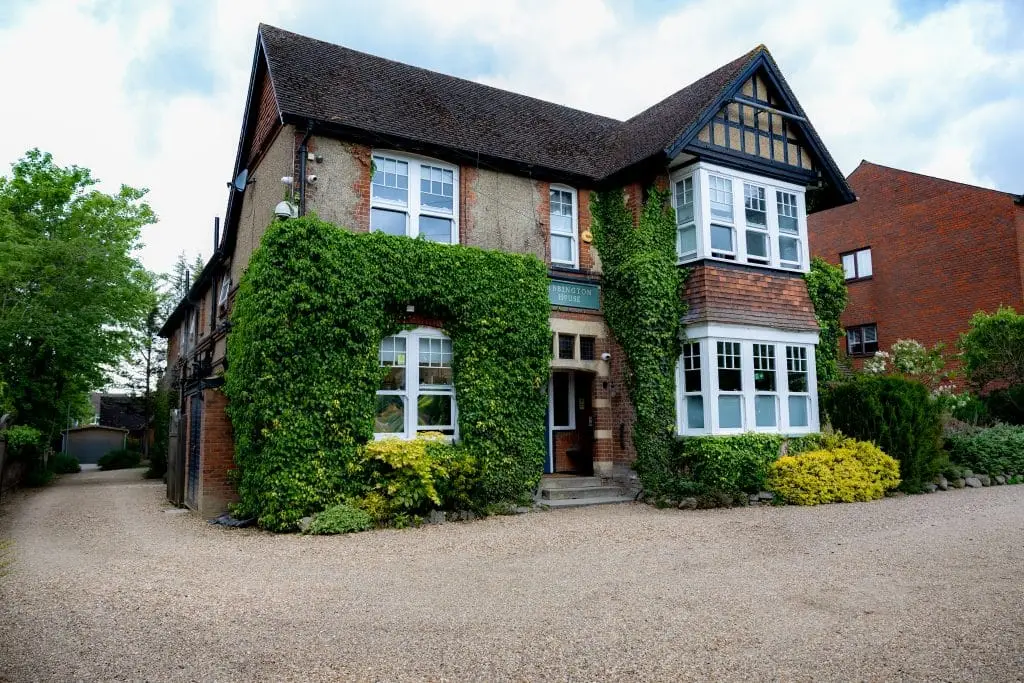
- Abbington House is a private residential drug and alcohol rehab centre in Stevenage, Hertfordshire.This page is part of our wider information about drug addiction,including how to recognise when substance use has become difficult to manage.
Is MDMA addictive?
It’s a reasonable question, particularly when so much of the conversation around MDMA focuses on recreational use.
- You might have heard people insist that ecstasy isn’t addictive. Others talk about it as though taking it at all means you’re heading towards a serious drug problem.
- Neither tells you much about your own situation. One thing that’s worth understanding is that the frequency of someone’s drug use doesn’t automatically tell us whether they’re dependent on it.
- According to the Office for National Statistics, only 2.2% of people aged 16 to 59 in England and Wales who reported using ecstasy in the previous year had used it more than once a month.
- But the same survey makes an important distinction: “Frequency of drug use is not a measure of drug dependence.”
- In other words, knowing how often someone takes ecstasy doesn’t tell you everything about their relationship with it. Instead of asking whether you take MDMA often enough for it to count as a problem, think about the place it occupies in your life.
- Would you still look forward to those nights as much without it? Have you found yourself making exceptions to rules you’ve set about using? Is it something you’re genuinely comfortable with, or something you’ve started having to justify to yourself?
- Those questions can tell you more about why you’re concerned than simply counting how many times you’ve taken it.
When it stops being a night out
- One of the reasons MDMA use can be difficult to question is that your life might still look perfectly ordinary.
- You have a job. You see your family. You might have a mortgage, children and a hundred other responsibilities that have nothing to do with drugs.
- And because those parts of your life are still functioning, it's easy to assume that your MDMA use can't be much of a problem. But you might have started noticing smaller changes.
- Perhaps you're less interested in going out unless you know MDMA will be involved. You used to enjoy the music, the company and the night itself, but now there's a part of you that feels something will be missing without it.
- Or maybe you find socialising easier when you've taken it. You feel more comfortable talking to people, less self-conscious, more willing to say what you think.
- It can be difficult to admit that something you enjoy has also become something you feel you need in certain situations. Then there's the planning.
- You might arrange a night out knowing you'll need to keep the following day free. You turn down lunch with family or avoid making commitments because you don't know how you'll feel afterwards.
- On its own, that might not seem particularly significant. But when you start organising parts of your life around taking MDMA, it's worth asking whether you're still happy with the arrangement.
- For some people, the change is even harder to explain because they've already grown out of the social scene where their use began.
- Your friends stopped taking ecstasy years ago. The big weekends became less frequent, everyone settled into different routines, and you did too. Except MDMA is still there.
- Perhaps you take it at home now, or with the same small group of friends. You don't necessarily enjoy it in the way you once did, but you haven't quite managed to leave it behind.
- You might even have told yourself you'll stop, only to find that when another opportunity comes along, you take it. None of this means you need to diagnose yourself. But you can acknowledge that your relationship with MDMA has changed, even if you're still managing the rest of your life.
- Our guide to the early signs of addictionlooks more closely at the point where substance use starts affecting everyday decisions.
- And if you've been telling yourself things aren't bad enough to warrant help, you might find our article on reaching rock bottomuseful.
MDMA use in Britain
MDMA is still used in England and Wales, although reported use has fallen over the past decade.
The Office for National Statistics found that, in the year ending March 2025, 1.2% of people aged 16 to 59 reported using ecstasy during the previous year. Among people aged 16 to 24, the figure was 1.9%.
Ten years earlier, those figures were 1.7% and 5.3% respectively.The decline is particularly noticeable in the younger survey group.
1.2%
Aged 16 to 59 Year ending previous
1.9%
Aged 16 to 24 Year ending March previous
But national figures only tell us how many people report using a substance. They don’t tell us how someone feels about their use, what it’s costing them personally or whether they’ve tried to stop.
There’s another reason the national picture is incomplete.England’s adult drug treatment statistics don’t record ecstasy as a separate category. Instead, it’s included within the broader group of non-opiate drugs.
So we can’t use those figures to establish how many people are seeking treatment specifically because of MDMA.And if you’re someone who’s been quietly questioning your use, national statistics probably aren’t going to answer the question that matters most to you anyway.
When the days afterwards start affecting your life
Sometimes the night itself isn’t what makes you question MDMA. It’s everything you find yourself arranging around it.
You might notice that you’re keeping the following day clear more often. Or that you’ve started declining plans because you expect you’ll need time to yourself. Perhaps you’ve reached a point where you’re asking whether a night out is worth everything you’ve arranged around it.
That’s a reasonable thing to question.
You don’t have to establish whether what you’re experiencing is a comedown, withdrawal or something else before recognising that it’s having an effect on your life.
- If you're concerned about stopping drug use, our drug withdrawal guideexplains how withdrawal is considered more generally.
- We've also written about depression and addictionfor people concerned about low mood alongside substance use.
What if you're using other drugs as well?
For some people, MDMA is only one part of their drug use.You might drink alcohol on the same nights, use cocaine occasionally or take ketamine in different social situations.Perhaps you’ve never thought of those things as connected because you use them for different reasons.
But when you’re trying to understand whether your relationship with drugs has changed, it’s important to look at the whole picture.That includes prescribed medication, such as antidepressants, as well as substances you take recreationally.You can find more information aboutcocaine and alcohol andketamine addiction in our substance-specific guides.
If you’re considering treatment, it’s important to be open about everything you’re taking. You don’t have to decide which substance is the main problem before speaking to someone.
Why it can be so difficult to admit MDMA has become a problem
There's something particularly difficult about telling people you're worried about your ecstasy use. With some substances, people immediately understand why someone might want help. With MDMA, you can find yourself having to explain why you're concerned in the first place.
You tell a friend you're thinking about stopping, and they laugh because you hardly ever take it. Or someone reminds you that you've got a good job, a family and a perfectly normal life.
It's only a party drug.
Everyone does it.
You'll grow out of it.
The problem is that you might have been telling yourself exactly the same things.
Perhaps you've considered speaking to your GP but imagined how the conversation would go. You picture explaining that you take MDMA occasionally, that your life hasn't fallen apart, and that you're not even sure whether you'd call yourself addicted.
And then you wonder whether they'll think you're wasting their time. But you don't need to wait until your circumstances become more serious to have that conversation.
You can tell someone that you've started relying on MDMA to enjoy certain situations. You can explain that you've tried to take a break but haven't managed to stick to it. Or you can simply say that you're no longer comfortable with the amount of space it occupies in your life.
You don't need to make your situation sound worse than it is. You also don't need to minimise it because other people seem unconcerned.
And it's perfectly reasonable to say, "I'm not sure whether this is a problem, but I'd like to talk about it."
Our article about addiction and shamelooks at some of the reasons people struggle to speak openly about substance use.
If you're thinking about getting support, our help for myselfpage explains where you can begin.
If you're worried about someone else's MDMA use
It’s difficult when someone you care about doesn’t seem to share your concerns about their drug use.You might be worried about your partner, a friend or an adult son or daughter. Perhaps you’ve noticed that they’re making more plans around MDMA, or they’ve mentioned wanting to stop but haven’t followed through.
whether they're addicted before talking to them. Instead of trying to prove that their use is a problem, start with what you've noticed and how you feel about it.
that you've been concerned about how much of their time now revolves around certain nights out. Or ask whether they're still enjoying MDMA in the same way they used to.
for an answer you weren't expecting. They might disagree with you. They might be questioning things themselves but haven't found a way to talk about it. Or they may simply not be ready to consider changing anything.
You can be honest about your concerns without turning the conversation into an argument about whether their use qualifies as addiction.
Ourhelp for loved ones page offers more guidance on supporting someone whose substance use is worrying you.
Getting help for MDMA use
you don't have to decide straight away whether residential rehab is the answer.
or contact a local drug and alcohol service to discuss what's happening. The important thing is finding support that's appropriate for your circumstances.
may also be something you want to consider, particularly if your concerns extend beyond MDMA or you're finding it difficult to make changes in your usual environment.
private residential drug and alcohol treatment in Stevenage, Hertfordshire. Before anyone arrives, there's an assessment to establish whether the setting is suitable. A typical residential stay is around 28 days, although this is assessed individually.
cognitive behavioural therapy (CBT), dialectical behaviour therapy (DBT), trauma-informed work and a 12-step structure. These approaches provide opportunities to look at the circumstances surrounding substance use and work on changes that can continue after treatment.
16 weeks of family support, one year of structured aftercare and lifetime access to the Abbington Community.
The cost of a residential stay is covered by a single fixed fee, with more information available on our rehab costs page.
You can read about residential drug rehaband what happens during an addiction assessment.
If you're not ready to consider residential treatment, our guide to what to do when you're not ready for rehabmay help you think through your options.
To discuss your circumstances with Abbington House, call 01438 583222.
Common questions about MDMA addiction
01 : Is ecstasy illegal in the UK?
Yes. MDMA, including ecstasy, is classified as a Class A drug in the UK.
02 : How long does an MDMA comedown last?
An MDMA comedown can last a few days, although the experience varies from person to person. Some people feel back to normal relatively quickly, while others report feeling low, anxious, tired or having difficulty sleeping for longer.
03 : Is MDMA the same as speed?
No. MDMA and amphetamine, commonly known as speed, are different drugs.
04 : How much does treatment cost?
Abbington House charges a single fixed fee for a residential stay. You can find more information about what’s included on ourrehab costs page.
Talking things through
If you’ve started wondering whether MDMA has become a problem, you don’t have to work out the answer on your own before speaking to someone.
You might want to talk about your own use, or you’re concerned about someone you love. Either way, the conversation can begin with what’s been happening and what you’d like to change.
Abbington House can discuss whether residential treatment may be suitable, or whether another type of support would be a better fit.
Call01438 583222 to speak to the admissions team.
- Sources
- Office for National Statistics. Drug misuse in England and Wales: year ending March 2025. Published 11 December 2025.
- Office for Health Improvement and Disparities. Adult substance misuse treatment statistics 2024 to 2025. Published 4 December 2025.