
How Residential Treatment Works at Abbington House
At Abbington House, residential rehab gives us time to understand the person, the substance use, and what may have been sitting beneath it.
Treatment shaped around the person in front of us.
Residential Treatment at Abbington House
Residential treatment provides structured addiction care in a setting where someone can step away from the pressures, routines and access to substances that have made change difficult to sustain.
Treatment at Abbington House brings assessment, medically supervised detox where needed, therapy, daily structure, family support and preparation for life after rehab into one contained stay.
The exact focus differs from person to person. It depends on the substances involved, whether physical dependence has developed, what has been happening around the substance use and what previous attempts to stop may have been missing.

Most people arrive after trying to manage things in other ways. They may have stopped for a while, promised themselves or their family that things would change, or tried to keep working and functioning while the same pattern continued underneath.
Residential treatment creates enough time and stability to understand what has been maintaining that pattern and what needs to be different when someone returns home.
At Abbington House, treatment takes place in a small, home-like setting. People are known personally by the team, supported throughout the day and night and given time to settle into treatment without being expected to arrive ready with every answer.
Rehab Treatment for Alcohol and Drug Addiction
Abbington House provides residential treatment for people affected by alcohol addiction and drug addiction, including illicit and prescription drugs. The residential setting and core treatment structure are shared, while assessment, detox needs and the focus of therapy differ from person to person.
Treatment for Drug Addiction
How residential treatment helps people affected by illicit drugs, prescription drug dependence or the use of several substances (polysubstance use).
Treatment for Alcohol Addiction
How residential treatment supports people whose drinking has become difficult to control, including medically supervised detox where this is clinically needed.
What Happens in Rehab?
To learn more about what life is like in rehab, and what a typical stay involves at Abbington House, click on one of the menu items below to read more.
Why Rehab Helps
Addictive behaviours do not happen in isolation. They become tied to routines, places, relationships, stress, sleep, work, money and the ways someone has learned to manage difficult emotions.
Trying to change while remaining surrounded by those same pressures can make every day feel like a test. Residential rehab creates a pause from that environment.
At Abbington House, each day has a clear rhythm. There are regular meals, therapy, group work, quieter periods, activities and time to rest. Support is available when things feel difficult rather than only during a scheduled appointment.
This matters because some of the most useful treatment moments do not happen in a therapy room. They may happen after a difficult phone call, during a disagreement, when someone feels the urge to withdraw or when an old way of coping begins to appear.
Being here gives people the opportunity to notice those patterns, talk about them and begin responding differently while support is close by.
You Do Not Have to Pretend Here
Abbington House is led by people who understand addiction and the shame that can keep someone hiding what is really happening.
People are not managed from a distance or treated as a problem to be fixed. They are met as people.
You do not need to arrive confident, certain or ready to explain everything. Many people arrive nervous, exhausted, ashamed, defensive, relieved or unsure whether they should be here at all.
That is understood.
The first job of treatment is not to force someone to open up. It is to help them feel safe enough to begin.
Arriving and the First Few Days
Arriving at residential rehab can feel like a significant step. Even when someone knows that something needs to change, leaving home and entering an unfamiliar environment can bring anxiety, uncertainty or second thoughts.
When you arrive at Abbington House, the initial focus is on helping you settle. The team will explain the environment, introduce you to the people supporting you and make sure immediate physical, emotional and practical needs are understood.
The first few days may include:
- reviewing the assessment and current concerns
- checking what alcohol, drugs or medication have been used
- beginning medically supervised detox where this is needed
- resting and beginning to restore sleep
- eating regular meals and addressing immediate nutritional needs
- meeting members of the treatment team
- joining groups gradually as you become more settled
- agreeing the initial priorities for treatment
Not everyone arrives ready to take part in everything immediately. Someone going through withdrawal, exhaustion or intense anxiety may need time to stabilise before they can engage fully.
Treatment begins from where the person actually is, not where anyone thinks they should already be.
What a Typical Day Looks Like
Days at Abbington House are structured, but they are not identical. The timetable provides consistency while allowing treatment to respond to individual needs, appointments and how someone is progressing.
A typical day may include:
- breakfast and a morning check-in
- group therapy or structured recovery work
- one-to-one therapy or individual appointments
- regular meals and breaks
- time for reflection, reading or written work
- movement, creative activities or time outdoors
- peer support and informal time with others in treatment
- evening groups, meetings or quieter activities
- support overnight when needed
The purpose of this rhythm is not to keep people busy for the sake of it. Regularity helps restore sleep, appetite, concentration and a sense of predictability that may have been lost during active addiction.
It also helps people practise showing up consistently, staying present when emotions become difficult and taking responsibility for the ordinary parts of daily life.
Living Alongside Other People in Treatment
Some people feel nervous about group treatment or living alongside people they have not met before. They may worry that they will not fit in, that their situation is different or that they will be expected to share more than they are ready to.
People come to Abbington House from different backgrounds and with different experiences of alcohol, drugs, family life and mental health. What they often recognise in one another is the effort involved in hiding, managing or surviving a pattern that has become difficult to control.
Group work does not require everyone to have the same story. It creates space to hear how other people understand denial, shame, cravings, relationships, relapse and the fear of change.
Living alongside others also allows connection to develop outside formal therapy. A conversation over a meal or support after a difficult day can help someone feel less alone and more able to remain engaged.
How Treatment Changes During a Stay
Residential treatment does not stay the same from arrival to discharge. The focus changes as someone becomes physically stable, begins understanding their patterns and prepares to return to everyday life.
Settling and Stabilising
The first stage is often about safety, rest and orientation. This may include detox, restoring sleep and nutrition, reducing immediate distress and beginning to build trust with the team.
Understanding the Pattern
As someone becomes more settled, treatment begins looking more closely at what has been happening around the alcohol or drug use. This can include emotional triggers, relationships, trauma, stress, shame, routines and previous attempts to stop.
Practising Different Responses
Understanding alone is not always enough. Treatment also involves practising communication, boundaries, emotional regulation, asking for support and staying present when the urge to escape or withdraw appears.
Preparing to Leave
Later in the stay, attention turns increasingly towards life outside Abbington House. Treatment considers the home environment, work, family relationships, social situations, access to alcohol or drugs and the support that will remain in place.
Many people stay for around 28 days, although the appropriate length of treatment depends on assessment, detox needs, previous treatment and how the person progresses during their stay.
Detox Where Needed
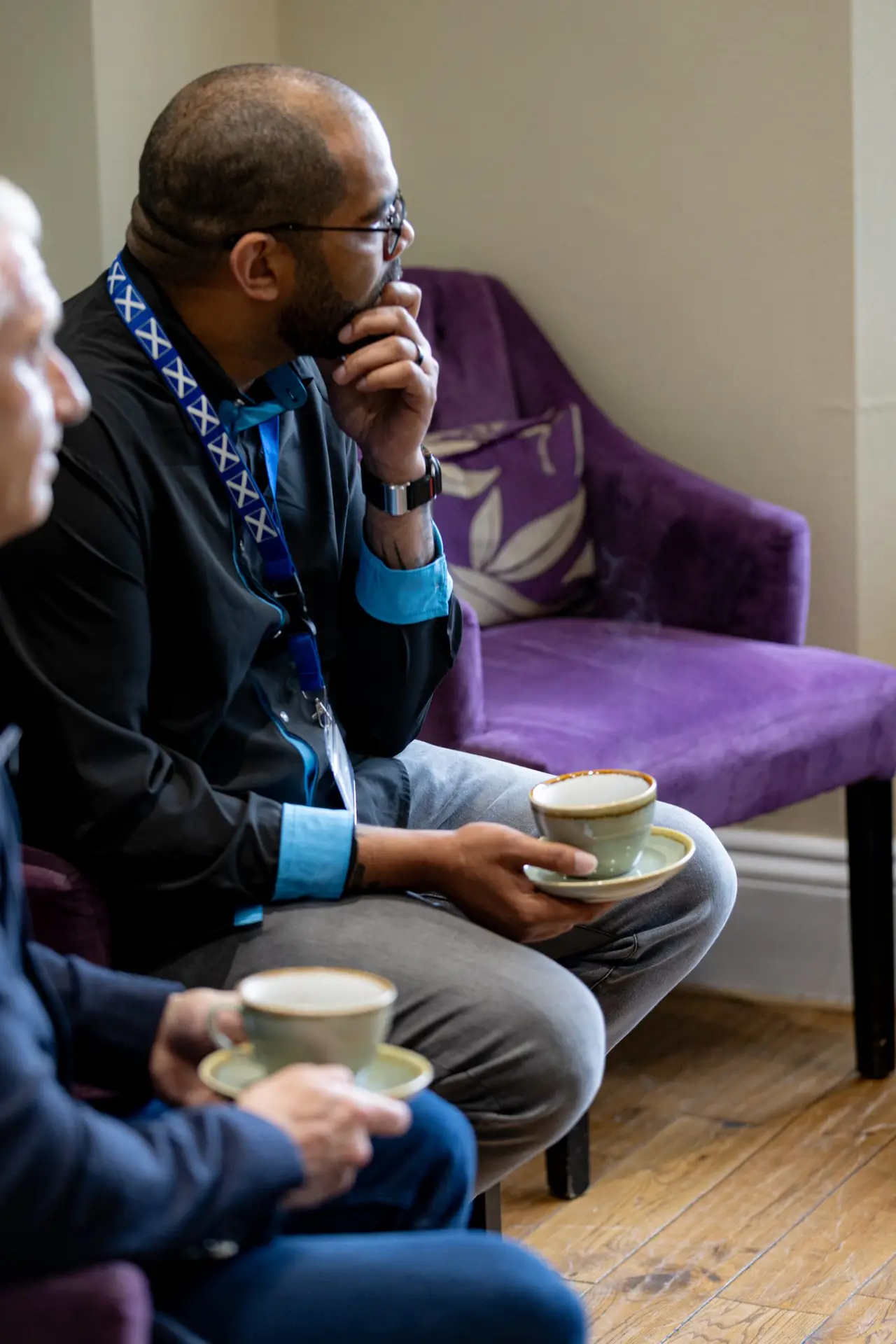
Detox Where Needed
For some people, detox is a necessary first step. For others, it’s not needed at all. That depends on what someone has been using or drinking, how much, how often, for how long, and what happens when they try to stop.
Where detox is needed, Abbington House provides medically supervised detox as part of the residential stay. This may include medical assessment, medication-assisted support where appropriate, and 24-hour care from the team.
Detox is not treated as separate from recovery. Therapy and emotional support begin alongside the physical stabilisation, because removing alcohol or drugs without understanding what has been driving the pattern is one of the reasons previous attempts may not have held.
Therapy and Recovery Work
Therapy at Abbington House combines structured recovery work with evidence-based and body-based approaches. The 12 Steps serve as a guiding framework, alongside therapies that help people understand behaviour, regulate emotions, process trauma, rebuild relationships, and develop healthier ways of coping.
Evidence-based therapies
- Cognitive Behavioural Therapy (CBT) — to explore thoughts, behaviour patterns and coping strategies.
- Dialectical Behaviour Therapy (DBT) — to support emotional regulation, distress tolerance and relationships.
- EMDR — a trauma-focused therapy used where appropriate to help process distressing memories.
- One-to-one therapy — individual sessions with an assigned therapist.
- Group therapy — shared therapeutic work, connection and peer support.
Physical & Mental Wellness Activities

Physical & Mental Wellness Activities
Not all recovery work happens through talking. Some people need help settling their nervous system, reconnecting with their body, or finding expression in other ways.
Holistic and wellbeing activities may include yoga, meditation, breath work, qigong, sound therapy, art therapy, Reiki, gym, time outdoors and gentle physical activity.
These aren't used instead of therapy. They sit alongside the therapeutic work and help people feel more grounded during treatment.
Food, Rest and Comfort
Food and rest are not small details. Drinking or drug use can affect sleep, eating, physical health and daily routine. Our in-house chefs prepare fresh, balanced meals each day, with dietary requirements catered for wherever possible.
For many people, eating properly, sleeping more consistently and being cared for physically are important parts of beginning to stabilise. Food & nutrition are a key part of our residential treatment offering.
Mental Health, Trauma and Neurodivergence
Addiction often sits alongside mental health difficulties, trauma, grief, anxiety, depression, ADHD, autism or long-standing emotional overwhelm. Sometimes alcohol or drugs have become a way of coping with a mind or nervous system that has been under pressure for years.
At Abbington House, we don’t treat addiction in isolation. Where mental health, trauma or neurodivergence are part of the picture, they’re worked with as part of treatment.
If group therapy feels daunting, we help people find their way into it rather than expecting them to be ready from day one. We don’t assume anxiety is resistance or that someone who struggles to engage simply doesn’t want to recover. Many people arrive having spent years feeling misunderstood, overwhelmed or convinced they’re somehow “too much”. Good treatment starts by understanding those experiences, not judging them.
Family Support

Family Support
Addiction rarely affects only one person. Families are also tired, frightened, angry, confused or unsure what to do next. They may have spent years trying to help, stepping back, setting boundaries, rescuing, arguing or hoping things would change.
Family support runs alongside treatment and continues online for 16 weeks after completion, helping relatives begin to understand addiction, communication, boundaries and rebuilding trust.
Preparing to Leave and Aftercare
Leaving residential treatment is not the end of the work. It is the point at which what has been understood and practised inside treatment begins to meet everyday life.
Before someone leaves Abbington House, treatment focuses on what they are returning to. This may include home, work, relationships, money, stress, social situations, prescribed medication and the people or places associated with previous use.
Aftercare planning helps someone identify:
- their main relapse risks
- early signs that they are becoming less stable
- who they can contact when things become difficult
- changes needed within daily routines and relationships
- ongoing therapy, peer support or medical care
- how family members can support recovery without taking responsibility for it
Abbington House includes one year of aftercare following residential treatment, with ongoing connection through the Abbington Community beyond that first year.
Starting Treatment
The first step is a confidential conversation. You do not need to know what treatment should look like or whether detox will be needed before calling.
You can explain what has been happening, what has already been tried and what is making the situation difficult to manage now. The team will listen, answer your questions and help establish whether residential treatment may be appropriate.
If Abbington House appears to be the right fit, the next steps will be explained clearly before you decide whether to continue.