
About Abbington House
A small private residential rehab centre in Stevenage, Hertfordshire, led by people who understand addiction personally as well as professionally.
Choosing a rehab means placing trust in people you have not yet met, often at a point when drinking, drug use or life around it has become difficult to talk about clearly.
A website can describe bedrooms, therapy and daily routines. It cannot show you whether someone will notice when a person has gone quiet, whether a difficult conversation will be avoided or whether responsibility will be taken when something needs addressing.
This page is about the people behind Abbington House, why the centre was created and what we believe that responsibility should look like.
Why Abbington House exists
Abbington House was founded by Greg Georghiou in May 2024.
Greg had seen how easily treatment could become impersonal when a centre grew too large or when people were expected to fit an established system without enough attention being paid to what had brought them there.
He wanted to create something smaller: a residential centre where people could be known personally, where the team could respond to what was actually happening and where support would not disappear the moment someone left.
That remains the purpose of Abbington House today.
We provide private residential treatment for alcohol addiction, illicit and prescription drug addiction and co-occurring mental health conditions from our centre in Stevenage, Hertfordshire.
The aim is not to become the largest rehab provider. It is to remain small enough for the work to stay personal and responsible.
"Non nobis solum nati sumus" — we are not born for ourselves alone. Those words from Cicero are part of why Abbington House exists. The team I've built around me holds the same view. The work we do is not for ourselves. It's for the people who arrive, the people who love them, and what comes next.
Greg Georghiou - Founder
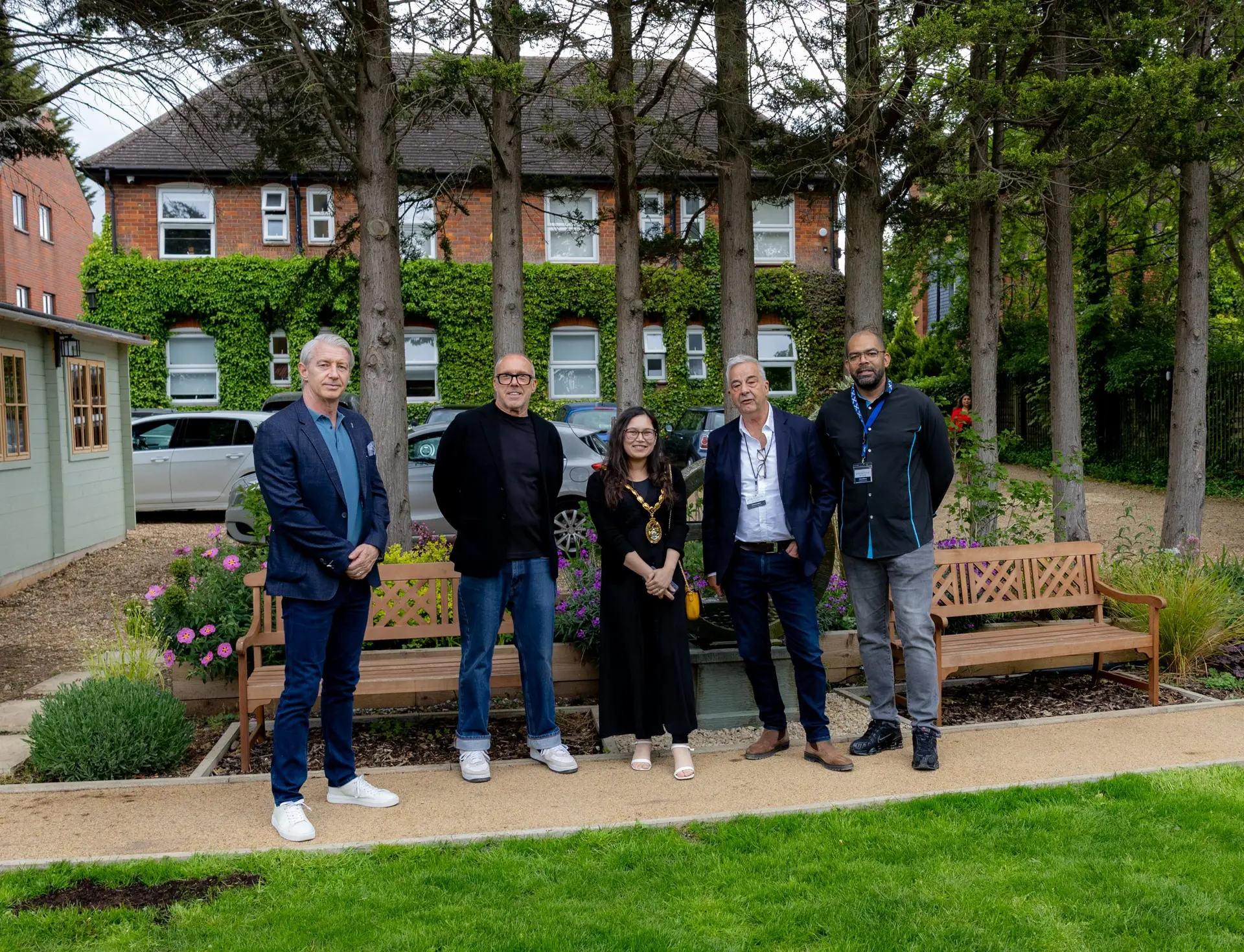
Led by people who’ve lived through addiction
Led by people who’ve lived through addiction
Many members of the Abbington House team are in long-term recovery themselves.
That matters, but not because one person’s experience gives them the answer to somebody else’s. No two histories are identical, and nobody arriving at Abbington House is expected to follow another person’s story.
Lived experience brings a particular kind of recognition. It can help someone notice the exhaustion underneath defensiveness, the fear underneath anger or the way shame can make a person minimise what is happening.
It also means members of the team understand that knowing what to say is not the same as being able to change. Many people who come into treatment already understand the damage alcohol or drugs are causing. The difficulty is that understanding alone has not been enough to stop the pattern.
Lived experience does not replace qualifications, professional boundaries, safeguarding or clinical judgement. It works alongside them.
Small enough for care to remain personal
Small enough for care to remain personal
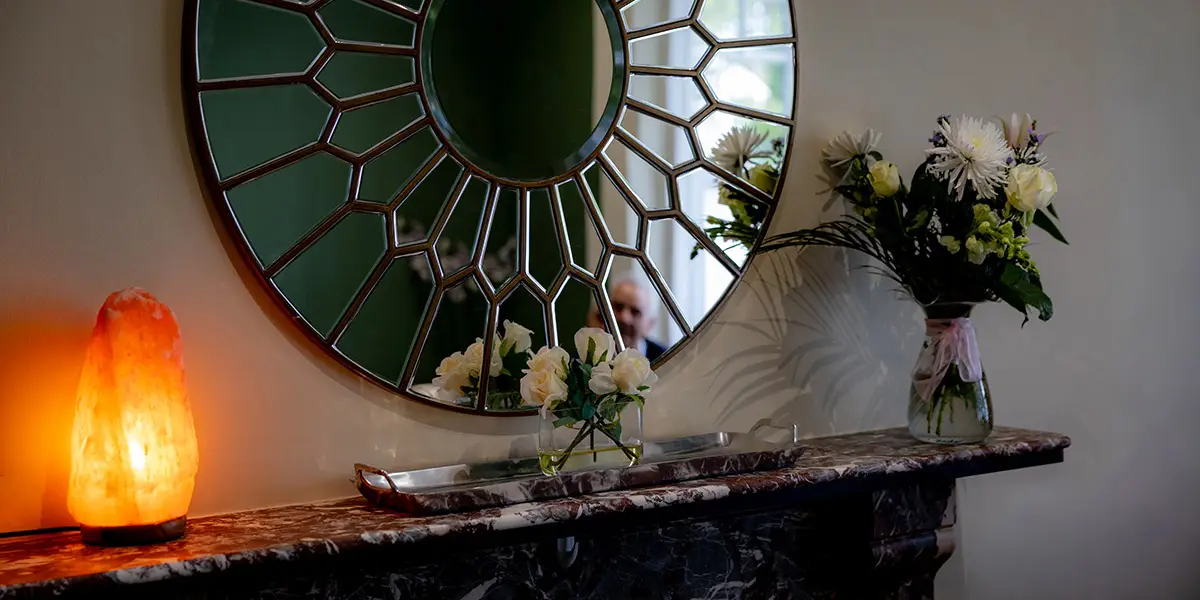
Abbington House is a 21-bed residential centre.
Its size means people are not anonymous within the house. Staff get to know how someone communicates, what they tend to do when they are struggling and what changes may indicate that something needs attention.
That may be a person withdrawing from the group, becoming unusually quiet, missing meals, sleeping differently or insisting they are fine when their behaviour suggests otherwise.
These observations do not replace clinical assessment. They provide the day-to-day context that helps the wider team understand how someone is coping.
Residential care is also shaped by more than therapy sessions. Night support, meals, housekeeping, medication processes, shared spaces and the way people are spoken to throughout the day all affect how contained and respected the environment feels.
That is why the wider Abbington House team includes therapists, medical and nursing staff, support workers, admissions staff, operations and housekeeping colleagues, and a head chef.
You can see the bedrooms, shared spaces, therapy rooms and gardens on our centre page.
How responsibility is held
Treatment at Abbington House is led day to day by Michael Williams, our Treatment Manager, alongside Gangani Thirimanne, Service Manager, and the wider clinical, therapeutic and support team.
Responsibility does not sit with one personality or depend on whichever member of staff has the strongest opinion.
Different members of the team bring different responsibilities:
- Medical matters are assessed and managed by appropriately qualified medical professionals
- Therapeutic work is delivered within the practitioner’s training and professional role
- Support workers contribute the observations that come from being alongside people throughout the day
- Risk, safeguarding and changes in someone’s presentation are shared and escalated
- Operational responsibility is kept separate from personal relationships within the house
- Decisions are discussed rather than being made in isolation
People in treatment should know who is responsible for what. Family members should be able to ask direct questions. Staff should be able to raise concerns without those concerns being dismissed or personalised.
Our treatment philosophy explains more about how shared responsibility, clinical oversight and lived experience work together at Abbington House.
We look beyond the substance

We look beyond the substance
Alcohol or drug use may be the most visible problem by the time someone reaches Abbington House, but it is rarely the only part of their life that needs to be understood.
People may also be living with anxiety, depression, trauma, grief, neurodivergence, relationship breakdown, isolation, work pressure or years of trying to function while something has become progressively harder to manage.
We do not assume that every difficulty can be explained by addiction. We also do not treat the substance use as separate from the rest of the person’s life.
The work begins by understanding what has been happening, what alcohol or drugs have come to do for the person and what may make returning to the same pattern more likely.
This does not mean applying every possible explanation to everyone. It means remaining curious enough not to reduce a person to the substance they have been using.
Families are part of the picture
Families are part of the picture
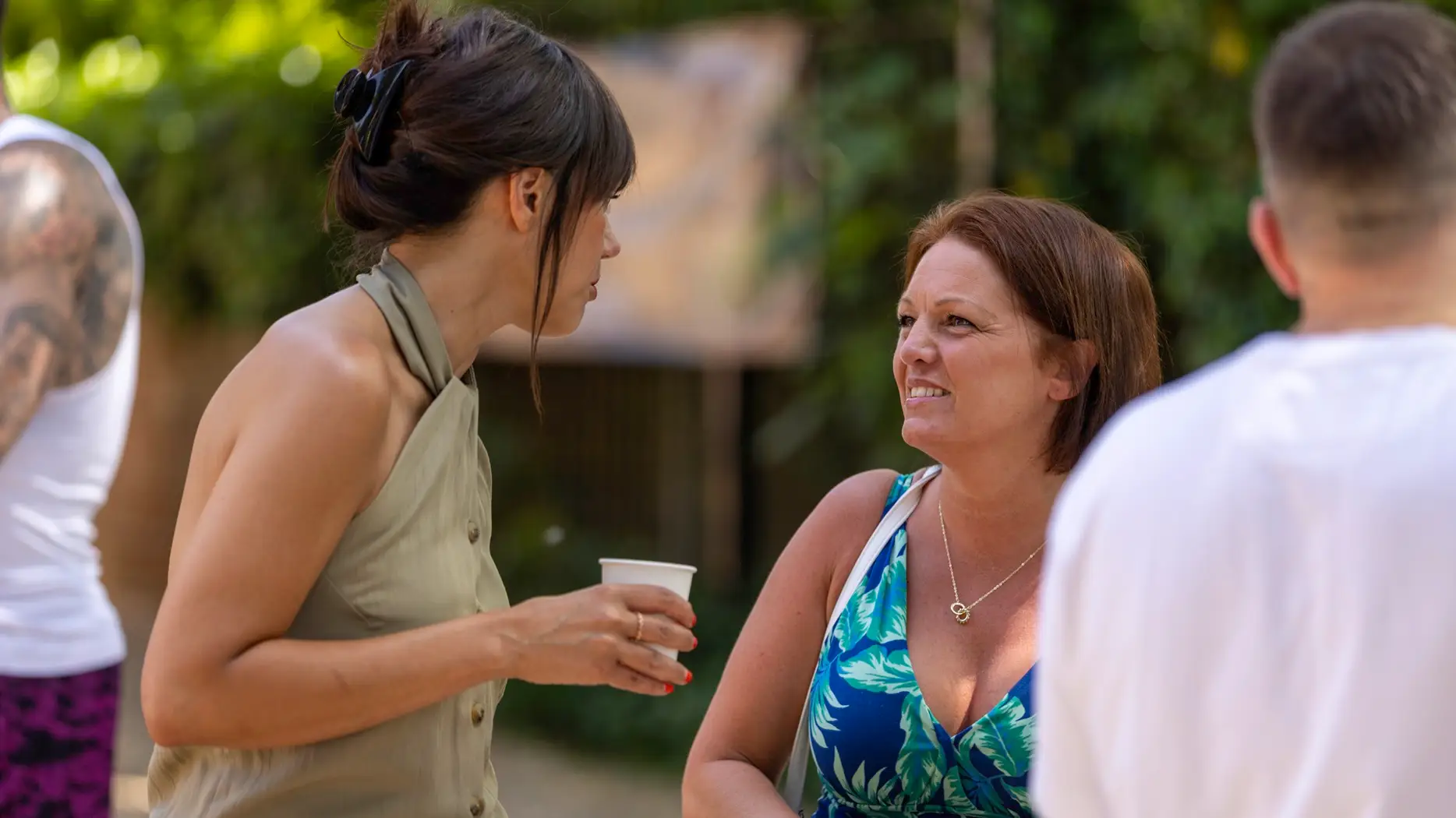
Addiction rarely affects one person in isolation.
Partners, parents, adult children, siblings and close friends may have spent a long time worrying, trying to help, covering consequences, setting limits or responding to repeated crises.
Many initial calls to Abbington House come from a family member rather than the person who may need treatment.
Where appropriate and with the person’s agreement, family involvement forms part of the work. Abbington House provides a weekly online family group within a 16-week period of support.
The purpose is not to turn relatives into therapists or make them responsible for keeping someone well. It is to help families understand what has been happening, communicate more clearly, establish boundaries and prepare for what may need to change after residential treatment.
Family members also need space to consider their own wellbeing. Supporting somebody does not require absorbing every consequence of their drinking or drug use.
Support should not stop at discharge

Support should not stop at discharge
A residential stay creates time and separation, but returning home brings ordinary pressures back into view.
Work, relationships, finances, family dynamics, loneliness and access to alcohol or drugs do not disappear because someone has completed treatment.
One year of aftercare is included following residential treatment at Abbington House. People also retain ongoing access to the Abbington Community.
This continued connection matters because leaving treatment is not the end of the work. It is the point at which much of what has been discussed has to be applied outside the structure of the house.
Aftercare cannot guarantee what happens next. It provides somewhere to remain connected, speak honestly about difficulties and seek support before a setback becomes harder to address.
What we will be honest about
People considering private rehab are often being asked to make an important decision while under pressure and commit a significant amount of money.
They should not have to interpret vague promises or discover important information after admission.
We will be clear about:
- Whether Abbington House appears suitable for the person’s needs
- Whether further medical information or assessment is required
- Whether detox may be needed and how it would be managed
- What the residential fee includes
- What family involvement can realistically look like
- What can and cannot be achieved during a residential stay
- Concerns that arise while someone is in treatment
- Situations where another service or level of care may be more appropriate
We cannot promise that treatment will be easy, that every person will respond in the same way or that a residential stay will resolve every difficulty in someone’s life.
We can promise that questions will be answered directly, concerns will be taken seriously and the person will not be treated as a number.
Regulation, scrutiny and improvement
Abbington House is regulated by the Care Quality Commission as a residential substance misuse service.
CQC regulation is not simply a badge for a website. It creates standards around safety, governance, staffing, care and accountability. Inspection findings are published independently and remain publicly available.
Where an inspection identifies something that needs improvement, it should be addressed rather than softened or hidden. People considering treatment have the right to read the findings and make their own informed decision.
Speak to Abbington House
An About page can explain who we are, but it cannot tell you whether Abbington House is appropriate for a particular situation.
If you are concerned about your own drinking or drug use, or you are calling about someone close to you, you can speak confidentially with the team. You do not need to have decided on treatment before calling.