Friday evening. No plans. Forty-eight hours ahead of you. The empty weekend is one of the hardest and least talked about parts of early recovery. What the feeling actually is and how to get through it.
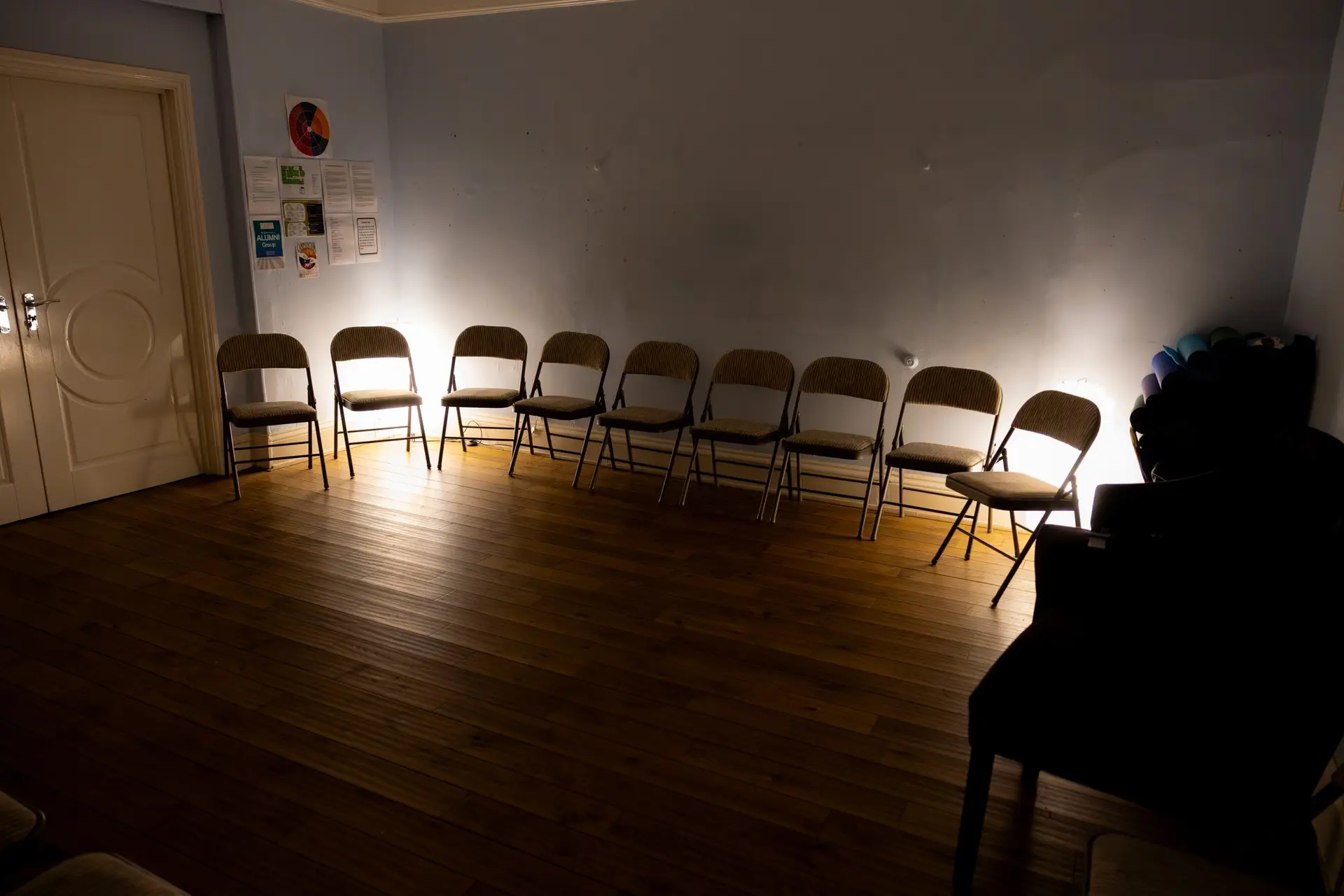
It’s 5:30pm on a Friday and you’ve shut your laptop and the weekend has officially started. Two days. Forty-eight hours. It feels like a corridor with no doors in it.
You stand in the kitchen for a moment. You open the fridge for no reason. You close it. You check your phone. Nothing. You wander into the living room. You sit down. You stand up. You think about putting the kettle on and then realise you don’t actually want a tea, you just want something to do with your hands.
There’s no plan. There’s nothing happening tonight that you’ve said yes to. And there’s panic building in your chest about being alone. It’s about the fact that you’ve got two whole days ahead of you and you genuinely don’t know what they’re meant to be filled with.
Welcome to the most underrated horror of early recovery.
Boredom isn’t the right word for it
People will tell you that early recovery is boring and that you just need to get used to it. They mean well, but they’re not always right, because this isn’t boredom.
Boredom is when there’s nothing interesting to do. What you’re feeling is what happens when the thing that used to structure your life has been removed and nothing has replaced it yet. The weekend hasn’t become empty, it’s just more exposed. The hours don’t know what they’re for and neither do you.
For however long you were using or drinking, your weekends had a shape. You had a ritual. The build-up. The plans. The texts. The pre-drinks. The night itself. The recovery the next day. The hair-of-the-dog or the painkillers or the lying-on-the-sofa watching something undemanding. The Sunday dread. The whole weekend had a rhythm, even when that rhythm was destroying you. Take all of that away and the weekend doesn’t become free time. It’s a vacuum.
The two flavours of terror, often on the same day
First you might feel restless, and you can’t settle. You start three things and finish none of them. You scroll for forty-five minutes and don’t remember a single thing you saw. Your body wants to be somewhere that isn’t your living room and your brain is trying to make peace with the fact that there’s nowhere to go that won’t make things worse.
Then by Saturday afternoon, the agitation often turns flatter. You’ve done your one thing. You sit on the sofa and a much quieter, much worse feeling shows up. Is this it? This is what life is now. Saturdays in the living room. Walks. Early nights. Cups of tea you don’t really want.
The two versions trade places within the same day. You might pace around at 11am and then be unable to move from the sofa by 4pm. This doesn’t mean something’s gone wrong in your recovery. It’s natural to feel lost whilst your nervous system tries to regulate.
The part nobody likes to say out loud
There’s a reason this article isn’t a “ten fun sober activities” listicle. Empty time is one of the highest-risk moments in early recovery, and pretending it isn’t doesn’t help anyone.
When you’re tired, restless, flat or some unhappy combination, your brain starts looking for the quickest available route back to feeling okay. If the quickest route it knows is the substance you spent years training it to reach for, that route is going to show up in your thinking whether you’ve invited it or not. By Sunday afternoon, the thought can sound very reasonable. Just this once. Just to take the edge off. It doesn’t sound like a relapse. It sounds like a solution to a problem you’ve been sitting with for two days.
If you know that empty weekends produce that thought, then when it shows up, you can recognise it for what it is instead of treating it as new information.
This is also, genuinely, what meetings are for. Not the philosophical version, but the practical version. A meeting on a Saturday night or a Sunday afternoon does one thing extremely well: it puts you in a room with people who know the exact corridor you’re sitting in, at the exact time when the corridor is at its worst. You don’t have to perform and you don’t have to be having a good week. You just have to be there for an hour, and an hour is often all it takes.
A lot of people in early recovery have a complicated relationship with meetings. Some find them immediately helpful and others find them hard. Some go for a while and eventually stop, and that’s fine. But if the flat is starting to feel small and the thought is starting to arrive, a meeting is one of the only things in the world specifically designed for that moment. It won’t fix everything, but it will probably get you to Sunday.
Missing the way the weekend used to feel isn’t the same as wanting to relapse. They sit very close together in your head, especially at 4pm on a Sunday, and learning the difference between them is one of the actual skills of early recovery.
Why filling the weekend the old way doesn’t work
The instinct is to plug the gap and find something to do. Replace what’s been taken away with something equivalent. And this doesn’t always work in the way people hope.
You’re comparing a Saturday afternoon at home to the highlight reel of every good weekend you ever had using. You’re not comparing it to the Sundays you woke up in clothes you didn’t remember putting on, with a phone full of messages you couldn’t bring yourself to open. You’re not comparing it to the weekends that ended in arguments, or in the hospital, or in that specific 11am self-hatred. The comparison your brain wants to make is between this Saturday and the best Saturday you can remember, and that fight is rigged.
What an early recovery weekend might actually look like
The truth is that a good weekend in early recovery might feel small and simple. One meal you cooked yourself. One episode of something. An early night. That’s the whole weekend.
Your system has been through a lot. It’s not ready for big weekends yet. Trying to fill forty-eight hours with stimulation and meaning and social contact and personal development is going to leave you exhausted and possibly furious that sobriety hasn’t delivered the rich full life it was supposed to.
At least for a while, the goal doesn’t need to be a great weekend. The goal is a weekend you got through without making yourself worse. That sounds like a low bar, but in early recovery, it is the bar.
Aftercare and the community side of recovery helps with this more than people expect, because a lot of the weekend terror is really the terror of being alone with hours you don’t know what to do with. One or two regular things in the week, whether that’s a meeting, a check-in or a coffee with someone who gets it, takes the corridor down from forty-eight hours to something more manageable.
And then Sunday evening arrives
One last thing, because if no one tells you about it you’ll think you’re cracking up. Sober Sunday evenings can sometimes feel worse than they did in active addiction, oddly, because the regret has been replaced by something more like grief. You haven’t done anything to regret. You also haven’t really done anything. The weekend just happened to you, and now it’s nearly Monday, and you don’t know whether you should feel relieved or sad.
A lot of people feel a low mood arrive around 6pm on Sundays in early recovery and assume something is wrong with them, but there’s nothing wrong. Give it an hour. Have a bath. Go to bed early. It passes.
If you’re reading this on a Friday evening, watching the corridor open up in front of you, the terror is real. It’s not in your head and it’s not a sign you can’t do this. It does get easier because you start letting the weekend be smaller, quieter, slower. Until then: a walk counts. A meal counts. A meeting counts. An early night counts. None of it is the whole answer. All of it is enough for now.